Showing posts with label Saudi Arabia. Show all posts

Sunday, October 28, 2012

Saudis continue to bulldoze Islam's history

The Saudi sacrilege and destruction of Islam's historical and sacred sites have a long history and they continue to this day as the following two stories (also) point out. Following these links are some bits from history.

NYTimes (2002): Where the Prophet Trod, He Begs,Tread Lightly: http://www.nytimes.com/2002/02/15/international/middleeast/15SAUD.html
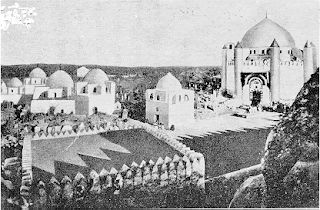
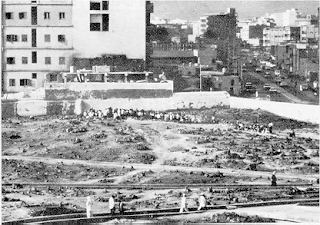
The Independent (2012): Saudis take a bulldozer to Islam's history (quoted below): http://www.independent.co.uk/news/world/middle-east/medina-saudis-take-a-bulldozer-to-islams-history-8228795.html
 
The Baqi cemetery years before the Saudi demolition
The Baqi cemetery after the 1925 Saudi demolition
Jannat al-Baqi is a cemetery in Medina, adjoining the Prophet's Mosque. Buried there are "Wives and Companions of the Prophet, several Imams of the Ahl al-Bayt [the noble progeny of the Prophet Mohammad], and a host of lesser luminaries from the spiritual and intellectual history of Islam." (Algar 2002:27). This was done by the forces of King Abdul Aziz al-Saud in the year 1345 AH (April 21, 1925)" (p. 43).

This was the second time the Saudi-Wahhabis engaged in the sacrilege of the two holy cities. From 1806 to 1812, for about six and a half years of their short-lived rule in the Mecca and Medina, the Saudi-Wahhabis alliance "engaged in their signature activity of dome demolition. In Mecca, the domes over the houses reputed to have been the birthplaces of the Prophet, Khadijat al-Kubra, Imam Ali, and Abu Bakr al-Siddiq, were destroyed, and the tombs and mausolea in the historic cemetery of al-Ma'la were levelled to the ground. In Medina, the treasury of the Prophet's Mosque was plundered but attempts to demolish the dome surmounting the grave of the Prophet were abandoned when several of the zealots entrusted with the task fell providentially to their deaths" (p. 27). About four years before, in 1802, Saudi-Wahhabi forces had similarly pillaged the holy city of Karbala in southern Iraq, the place of martyrdom and burial of Imam Husayn, the grandson of the Prophet (p. 24).

In 1925, numerous historic sites that had survived the previous Wahhabi occupation were demolished (p. 43).


Source: Hamid Algar. 2002. Wahhabism: A Critical Essay. Islamic Publications International.

----------------------------------------------------------------------------------
The Independent story

Saudis take a bulldozer to Islam's history
Authorities are building a mosque so big it will hold 1.6m people – but are demolishing irreplaceable monuments to do it
 
Three of the world’s oldest mosques are about to be destroyed as Saudi Arabia embarks on a multi-billion-pound expansion of Islam’s second holiest site. Work on the Masjid an-Nabawi in Medina, where the Prophet Mohamed is buried, will start once the annual Hajj pilgrimage ends next month. When complete, the development will turn the mosque into the world’s largest building, with the capacity for 1.6 million worshippers.

But concerns have been raised that the development will see key historic sites bulldozed. Anger is already growing at the kingdom’s apparent disdain for preserving the historical and archaeological heritage of the country’s holiest city, Mecca. Most of the expansion of Masjid an-Nabawi will take place to the west of the existing mosque, which holds the tombs of Islam’s founder and two of his closest companions, Abu Bakr and Umar.

Just outside the western walls of the current compound are mosques dedicated to Abu Bakr and Umar, as well as the Masjid Ghamama, built to mark the spot where the Prophet is thought to have given his first prayers for the Eid festival. The Saudis have announced no plans to preserve or move the three mosques, which have existed since the seventh century and are covered by Ottoman-era structures, or to commission archaeological digs before they are pulled down, something that has caused considerable concern among the few academics who are willing to speak out in the deeply authoritarian kingdom.

“No one denies that Medina is in need of expansion, but it’s the way the authorities are going about it which is so worrying,” says Dr Irfan al-Alawi of the Islamic Heritage Research Foundation. “There are ways they could expand which would either avoid or preserve the ancient Islamic sites but instead they want to knock it all down.” Dr Alawi has spent much of the past 10 years trying to highlight the destruction of early Islamic sites.

With cheap air travel and booming middle classes in populous Muslim countries within the developing world, both Mecca and Medina are struggling to cope with the 12 million pilgrims who visit each year – a number expected to grow to 17 million by 2025. The Saudi monarchy views itself as the sole authority to decide what should happen to the cradle of Islam. Although it has earmarked billions for an enormous expansion of both Mecca and Medina, it also sees the holy cities as lucrative for a country almost entirely reliant on its finite oil wealth.

Heritage campaigners and many locals have looked on aghast as the historic sections of Mecca and Medina have been bulldozed to make way for gleaming shopping malls, luxury hotels and enormous skyscrapers. The Washington-based Gulf Institute estimates that 95 per cent of the 1,000-year-old buildings in the two cities have been destroyed in the past 20 years.

In Mecca, the Masjid al-Haram, the holiest site in Islam and a place where all Muslims are supposed to be equal, is now overshadowed by the Jabal Omar complex, a development of skyscraper apartments, hotels and an enormous clock tower. To build it, the Saudi authorities destroyed the Ottoman era Ajyad Fortress and the hill it stood on. Other historic sites lost include the Prophet’s birthplace – now a library – and the house of his first wife, Khadijah, which was replaced with a public toilet block.

Neither the Saudi Embassy in London nor the Ministry for Foreign Affairs responded to requests for comment when The Independent contacted them this week. But the government has previously defended its expansion plans for the two holy cities as necessary. It insists it has also built large numbers of budget hotels for poorer pilgrims, though critics point out these are routinely placed many miles away from the holy sites.

Until recently, redevelopment in Medina has pressed ahead at a slightly less frenetic pace than in Mecca, although a number of early Islamic sites have still been lost. Of the seven ancient mosques built to commemorate the Battle of the Trench – a key moment in the development of Islam – only two remain. Ten years ago, a mosque which belonged to the Prophet’s grandson was dynamited. Pictures of the demolition that were secretly taken and smuggled out of the kingdom showed the religious police celebrating as the building collapsed.

The disregard for Islam’s early history is partly explained by the regime’s adoption of Wahabism, an austere and uncompromising interpretation of Islam that is vehemently opposed to anything which might encourage Muslims towards idol worship.

In most of the Muslim world, shrines have been built. Visits to graves are also commonplace. But Wahabism views such practices with disdain. The religious police go to enormous lengths to discourage people from praying at or visiting places closely connected to the time of the Prophet while powerful clerics work behind the scenes to promote the destruction of historic sites.

Dr Alawi fears that the redevelopment of the Masjid an-Nabawi is part of a wider drive to shift focus away from the place where Mohamed is buried. The spot that marks the Prophet’s tomb is covered by a famous green dome and forms the centrepiece of the current mosque. But under the new plans, it will become the east wing of a building eight times its current size with a new pulpit. There are also plans to demolish the prayer niche at the centre of mosque. The area forms part of the Riyadh al-Jannah (Garden of Paradise), a section of the mosque that the Prophet decreed especially holy..

“Their excuse is they want to make more room and create 20 spaces in a mosque that will eventually hold 1.6 million,” says Dr Alawi. “It makes no sense. What they really want is to move the focus away from where the Prophet is buried.”

A pamphlet published in 2007 by the Ministry of Islamic Affairs – and endorsed by the Grand Mufti of Saudi Arabia, Abdulaziz al Sheikh – called for the dome to be demolished and the graves of Mohamed, Abu Bakr and Umar to be flattened. Sheikh Ibn al-Uthaymeen, one of the 20th century’s most prolific Wahabi scholars, made similar demands.

“Muslim silence over the destruction of Mecca and Medina is both disastrous and hypocritical,” says Dr Alawi. “The recent movie about the Prophet Mohamed caused worldwide protests... and yet the destruction of the Prophet’s birthplace, where he prayed and founded Islam has been allowed to continue without any criticism.”

Mecca and Medina in numbers

12m The number of people who visit Mecca and Medina every year

3.4m The number of Muslims expected to perform Hajj (pilgrimage) this year

60,000 The current capacity of the Masjid an-Nabawi mosque

1.6m The projected capacity of the mosque after expansion

Friday, July 27, 2012

Syria's Stalemate

Below, Vali Nasr discusses the probable implications of the ongoing turmoil in Syria:

Syria's Stalemate - Vali Nasr - July 27, 2012 - ABC News Australia
http://www.abc.net.au/news/2012-07-27/syrias-stalemate/4159398


Take this clip with a pinch of salt though. Consider, for instance, these issues:

1. The problematic characterization of the conflict as primarily a "sectarian war". Given the involvement of many regional and global powers in Syria, the equation is much more complicated than just a communal-political conflict among different sects;

2. There is no probe into who this "international community" is and its interests and hypocrisies. For instance, why all of a sudden the monarchical states of the Persian Gulf have become the champions of human rights and democracy?;

3. No probe into the role of this "international community" in supporting and sending al Qaeda and other militant elements to Syria;

4. No probe into the role of this "international community" (and its propaganda machinery of media, political pundits, and gullible, involuntary, or fake lesbian bloggers) for not seeing the distinctions between Saddam's Iraq and Qaddafi's Libya on the one hand and Assad's Syria on the other**. For one, Assad still retains significant popularity among the masses, as Vali Nasr points out in the above clip, and even greater numbers of Syrian people are against a regime change, as verified by the Qatar Foundation. This "international community", however, actively supported the more uncompromising and militant elements in the opposition*** to hijack the whole opposition movement (to sabotage the possibility of the pro-democracy opposition pushing the Assad's government to engage in democratic reforms, which the Assad's government was willing to concede to stop the early protests and violence);

5. No probe into the impact of a debilitating Syria on the anti-colonial/hegemonic resistance in the region;

6. And, whether, perhaps, this debilitation of Assad's government was the goal of (at least some elements of) this "international community" from the first day? As discerning analysts knew from the beginning that the hegemonic forces could not have toppled Assad's government that easily, and even if they did, the alternative would not have been very desirable to them. Instead, perhaps, the "international community" wanted to make Syria engulfed into internal conflicts and bloodshed, so that it could not play its regional role in support of the anti-hegemonic resistance?

Another scenario is that perhaps the global and regional powers have already extracted enough from the Syrian turmoil -- in terms of weakening the regime and in terms of dividing the public/activist opinion (in the Middle East and beyond) and dividing the public/activist support for the anti-hegemonic resistance efforts -- that these powers now do not feel that a regime change would be necessary (they probably took into consideration the alternatives of either al Qaeda type extremists taking over power or the eruption of a full-fledged civil war if Assad's government were toppled. Either of these options would have destablized the border regions, and that would not have been desirable to the bordering countries, including Israel, Turkey, and Lebanon).

In both of these scenarios it is also possible that the foreign powers were hoping to remove Assad but retain the government (to keep Syria from a plunging into a full-fledged chaos), but haven't been successful at that, yet (despite their attempts to demoralize Assad's aides -- through rumors, bribes, bombings, defections, and so on).

** The emphasis on this distinction is not meant to support Washington's wars on the former two states.

***This was a repeat of the "strategic victimhood" and prolonging of conflict that was seen in the case of Darfur. As Kuperman argues in the following op-ed, the rebels became uncompromising because they believed that the Western powers and its support (including the Save Darfur movement) were behind them: http://www.nytimes.com/2006/05/31/opinion/31kuperman.html

In conclusion, no morality tale is being told here with the above questions -- just exhortation of doing a realistic assessment of the situation.

Some references:

""al-Qaeda" All Over Syria"

"Al Qaeda Taking Deadly New Role in Syria’s Conflict"

On Arab League's human rights concern for Syria, see
And, simultaneously, see this: "Saudi Arabia condemns Russian comments on human rights"

On Qatar Foundation's poll, see:
"Most Syrians back President Assad, but you'd never know from western media"

On the fake lesbian blogger, see

Here is an honest blogger who is rethinking his earlier assessment of Syrian violence

Another blogger: Check out the map given at Michigan Professor Juan Cole's site. The regions on the Lebanese and Turkish borders are the most volatile one. But, Cole does not analyze this observation the way Ron Paul does (see below). Is it because this is a democrat's war, not republican's? (Cole opposed Washington's wars on Afghanistan and Iraq, but supported the wars on Libya and now Syria.)
(A clearer map of Syria's neighbors:
http://www.yourchildlearns.com/online-atlas/images/map-of-syria.gif )


US Congressman Ron Paul on Washington's involvement in Syria (June 19, 2012)


"There’s no benefit for us to be picking sides, secretly providing assistance and encouraging civil strife in an effort to effect regime change in Syria. Falsely charging the Russians with supplying military helicopters to Assad is an unnecessary provocation. Falsely blaming the Assad government for a so-called massacre perpetrated by a violent warring rebel faction is nothing more than war propaganda. Most knowledgeable people now recognize that the planned war against Syria is merely the next step to take on the Iranian government, something the neo-cons openly admit. Controlling Iranian oil, just as we have done in Saudi Arabia and are attempting to do in Iraq, is the real goal of the neo-conservatives who have been in charge of our foreign policy for the past couple of decades."

Saturday, June 16, 2012

As crown prince Nayef dies, Saudis move deep into the succession crisis

Below see a critical and insightful excerpt about Nayef's legacy from the NYTimes' otherwise very politely-written story. The succession crisis has been looming over the Saudis' heads for many years now. But it became more pressing when Nayef's brother, crown prince Sultan, died about eight months ago (October 22, 2011). Now Nayef has died. Prince Salman who is speculated to become the new successor is 77 and has health problems. And, the "reigning monarch, King Abdullah, is 88."

As this story indicates, "Royal succession has passed down through the roughly 35 sons of king Abdul Aziz. But with the founder’s youngest sons now in their 60s, Prince Nayef’s death again raised the question of how the monarchy would move into the third generation of princes." Not to forget the competition - potentially bloody competition - among these sons and their sons, and also the rivalry between the Sudeiris and non-Sudeiris among king Abdul Aziz's sons (and their respective sons). Sudeiris were "all born to Hassa al-Sudeiri, a favorite wife of King Abdul Aziz al-Saud." Prince Salman belongs to the Sudeiris and was promoted to the key position of minister of defense in 2011 after the death of prince Sultan.

Nayef bin Abdul Aziz, Saudi Crown Prince Who Led Crackdown on Al Qaeda, Dies
By Neil MacFarquhar, NYTimes, June 16, 2012

Excerpt:

"“He was the last of the really strong members of the Sudeiri group,” said Abdulaziz Algasim, a lawyer and activist. “There is no other such traditional, strong member. I think the royal family will move toward more of a partnership with the public.”

The prince’s death topped the trending topics on Twitter, as social media in the Middle East lit up with tributes and condolences. But there was a significant undertow of criticism, with sardonic jokes, like one about whom the government of Bahrain would now turn to for advice on repressing its Shiite Muslim majority.

Or as Issandr el-Emrani, a political commentator in Egypt who calls himself the Arabist on his Twitter page, said in a post, “At least that’s one blow to the counterrevolution this week.”

At an infamous meeting in February 2011, with the region erupting and the presidents of Egypt and Tunisia toppling, Prince Nayef summoned the leading Saudi editors and columnists to a Riyadh dinner.

In an extended tirade, he dismissed the Tunisians as basically French and the Cairenes as louche urbanites, while arguing that the Saudis remained bedrock Arabs who held their traditional political system in high esteem, according to several accounts.

A question about the improving prospects of the Muslim Brotherhood, the Egyptian Islamist group, set off a diatribe against both the treachery of the Brotherhood and the journalist who asked the question, with the prince labeling the journalist a terrorist sympathizer. The dinner went on until 4 a.m. with the prince raging about the many plots seeking to undermine the House of Saud, according to those accounts.

It was considered a classic Prince Nayef moment. While open to holding long talks with the news media and others, he was so completely assured of his own point of view and of the need to confront even the smallest real or imagined threat to the rule of the Sauds — with notable animosity toward Iran, Shiite Muslims and Islamist extremists — that he could come across as entirely unreasonable at times.

But many analysts dismissed as overly simplistic the idea that he was only the champion of conservatives in Islam’s birthplace.

Prince Nayef “is widely seen as a hard-line conservative who at best is lukewarm to King Abdullah’s reform initiatives,” said an October 2009 diplomatic cable that was leaked via WikiLeaks. “However, it would be more accurate to describe him as a conservative pragmatist convinced that security and stability are imperative to preserve Al Saud rule and ensure prosperity for Saudi citizens.”

The cable described his multifaceted personality as “elusive, ambiguous, pragmatic, unimaginative, shrewd and outspoken.” He also displayed certain touches of vanity, like dyeing his mustache black."    

Thursday, March 22, 2012

Rannie Amiri: The Bahrain Uprising in Numbers

Please note that this piece was published at the end of last year, so the numbers may be a bit dated. But the ground situation does not appear to have improved on any of these perimeters since then. Meanwhile, the people's protests against the Khalifa regime have been regularly occuring. Most recently, there was a massive turnout on March 9, 2012 (see BBC, Raw-footage).

The Bahrain Uprising in Numbers
by Rannie Amiri, December 29, 2011
http://original.antiwar.com/rannie-amiri/2011/12/28/the-bahrain-uprising-in-numbers/

Population of Bahrain: 1.2 million

Number of citizens: 535,000

Percentage of citizens who are Shia Muslim: 70

Percentage of those in government: 13

Number of senior positions they fill in the Ministry of Defense, Ministry of Interior, Ministry of Cabinet Affairs, the National Guard, the Supreme Defense Council, and the Royal Court: 0

Percentage in the Ministry of Finance: 10

Percentage in the Ministry of Information: 6

Percentage in the judiciary: 5

Of the 1,000 National Security Apparatus employees, percentage who are non-Bahraini: 64

Percentage who are Shia Bahraini: less than 5

Of the 20,000 paramilitary Special Security Forces, percentage who are non-Bahraini: 90

Percentage who are Shia Bahraini: 0

Number of elected Bahrainis from all sects who sit on the country’s all-powerful Shura Council: 0

Day pro-democracy protests began in Bahrain as part of the Arab Spring: Feb. 14, 2011

People who took to the streets: 300,000

Proportional equivalent if Egyptians had done likewise: 40 million

Evidence that Iran instigated the demonstrations: 0

Day Saudi Arabia invaded to put down the uprising: March 14, 2011

Number of Saudi, UAE, and Qatari troops who arrived in armored vehicles: 1,500

People killed since Feb. 14: 50

Fatalities as a result of tear gas shot into residential homes or birdshot fired at close range: 30

Age of youngest victim: 5 days

Arbitrary arrests: 1,500

Civilians sentenced by military courts: 208

Physicians sentenced for offering medical treatment to demonstrators: 20

Cumulative jail terms levied: 2,500 years

Citizens currently accused of violating freedom of speech or assembly laws: 1,000

Documented cases of torture and ill-treatment since the revolt began: 1,866

Bahraini officials held responsible for killings or the systemic use of torture: 0

Mosques destroyed: 40+

Journalists targeted: 90+

Workers fired for supporting, taking part, or suspicion of having taken part in pro-democracy activities: 2,710

University students expelled for the same reasons: 477

Prisoners of conscience: 500

Bahrain’s rank among countries in political prisoners per capita: 1st

Proposed U.S. arms sales to Bahrain: $53 million

Years the al-Khalifa family has ruled Bahrain: 228

Days left in power: numbered

Thanks to the Bahrain Center for Human Rights and other NGOs for helping compile these figures.

Sunday, March 4, 2012

Saudis and UAE fund extremist groups in Southern Punjab, Pakistan - Wikileaks

With a pinch of salt, check out these two videos. The first is by Dawn News in Urdu, uploaded on youtube on May 22, 2011, that quotes a leaked cable of Bryan D. Hunt, a US diplomat in the Lahore consulate. The report suggests that some extremist groups in Southern Punjab receive more than 10 million dollars annually directly from Saudi Arabia and UAE.


The report, however, maligns whole maslaks (Islamic schools of thought) instead of focusing on the specific extremist-leaning organizations (belonging to these maslaks or otherwise), like Sipahe Sahaba, Jamatud Dawa, Jaish-e-Mohammad, and Tehrik-e-Taliban Pakistan. The following cable from the same diplomat, published by Dawn, names these specific groups. It also emphasizes the mutual connection among these groups (the connection extends beyond Southern Punjab). The cable also suggests that Qaddhafi's Libya may also have supported the extremist groups in Pakistan.

http://www.dawn.com/2011/05/26/2009-was-qaddafi-funding-sipahe-sahaba.html

Next, another clip in Urdu, uploaded on youtube on March 2, 2012, where some Ahle Hadith ulama reject and protest the militant agenda of Lashkar-e-Tayiba and Jamatud Dawa. (This particular clip does not contain any condemnation of these militant groups' anti-Shia ideology and activities.)

Thursday, October 13, 2011

The whoo-scary Iranian terror plot

Watching the US corporate media coverage of this Iranian terror plot is like watching "Wag the Dog" movie again - except that the enemy plot in the movie had less holes and was more convincing than the one in the present episode.

The “very scary” Iranian Terror plot
Glenn Greenwald
http://politics.salon.com/2011/10/12/the_very_scary_iranian_terror_plot/singleton/
The most difficult challenge in writing about the Iranian Terror Plot unveiled yesterday is to take it seriously enough to analyze it. Iranian Muslims in the Quds Force sending marauding bands of Mexican drug cartel assassins onto sacred American soil to commit Terrorism — against Saudi Arabia and possibly Israel — is what Bill Kristol and John Bolton would feverishly dream up while dropping acid and madly cackling at the possibility that they could get someone to believe it. But since the U.S. Government rolled out its Most Serious Officials with Very Serious Faces to make these accusations, many people (therefore) do believe it; after all, U.S. government accusations = Truth. All Serious people know that. And in the ensuing reaction one finds virtually every dynamic typically shaping discussions of Terrorism and U.S. foreign policy.

Iranian Terror Plot: Fake, Fake, Fake
Justin Raimondo
http://original.antiwar.com/justin/2011/10/11/iranian-terror-plot-fake-fake-fake/

News Media Hypes the “Iran Did It” Line, Ignores Holes in the Story
John Glaser
http://www.antiwar.com/blog/2011/10/12/news-media-hypes-the-iran-did-it-line-ignores-holes-in-the-story/

Monday, May 30, 2011

Western guns and training used to crush the Arab spring

The NYTimes deserves credit for rigorously and scathingly going after the private security firm, Blackwater, and its founder, Erik Prince, in the last few years. The latest has been its reporting of a 800-member foreign militia that Erik Prince is building for the UAE:

Secret Desert Force Set Up by Blackwater’s Founder (NYTimes, May 14, 2011)
http://www.nytimes.com/2011/05/15/world/middleeast/15prince.html

I wish that the NYTimes had similarly scrutinized the military training and arms sales done under the official stamp of the US government and Congress. The US logistical support, troops training, and counter-insurgency equipments have facilitated far too many dictatorial regimes in their attempts to suppress the legitimate concerns of their people.

US Congress notified over $60bn arms sale to Saudi Arabia (The Guardian, October 21, 2010)
http://www.guardian.co.uk/world/2010/oct/21/us-congress-notified-arms-sale-saudi-arabia

Also See: U.S. Arms Sales Agreements with the Middle East, 1999-2006 (Statistics)

Further, the NYTimes could also cover similar support given by other so-called pro-democratic, western countries to dictatorial regimes around the world. For instance,

UK training Saudi forces used to crush Arab spring (The Guardian, May 28, 2011)
http://www.guardian.co.uk/world/2011/may/28/uk-training-saudi-troops

Friday, May 27, 2011

Saudis scramble to preserve the reigonal status quo

A neat story from today's NYTimes is quoted below. I found the connection made with Nasser's Egypt at the end to be quite relevant. Particularly, it suggests that the logic of Saudi scramble is more than just an 'anti-Shia impulse'. It is the status quo that the Saudis seek to protect against any contenders, 'Shiite' or otherwise.

In Syria, I think that none of the major regional players wants the 'regime' (+/- Assad) to go and replaced by chaos (likely) or the 'extremist groups' (less likely). Though some do want to see the Syrian regime get weaker enough so it could not play the 'Ace' card it has usually played in regional politics, particularly in Lebanon.

For Yemen, the article's suggestion seems a bit off the mark. I think it is the replication of the 'Eygptian solution' that the Saudis (and GCC+US/Israel) seek in Yemen: Remove Mubarak, but make sure the 'regime' is in place; promote 'reforms' but make sure that only the 'good' guys from the opposition (and not just anyone from the opposition) come in power through the political process.

However, that solution hasn't worked for Egypt, yet. The protests are ongoing; the Egyptian foreign policy for Israel and Iran is changing; the MB has formed a new political party and seeks to contend in the upcoming elections. It is also unlikely that such a solution will work for Yemen. Chaos seems likely to occur if Saleh does not step down. The post-Saleh regime that the Saudis wish to build would also face protests and resistance. Any widely representative government in Yemen will probably build more cordial relations with Iran, undermining the monopolizing influence that the Saudis seek over its neighboring states.

On a related note, it's intriguing to see how the Qatar-based AlJazeera's coverage of Yemen increases when Saleh refuses to cooperate with the GCC and decreases when he makes cooperative gestures. When not in the 'ignore' mode for Bahrain, AlJazeera is subtly promoting a distinction of 'moderates' (the good guys) against those 'extremists' who want to topple the system of Sheikhdom altogether.

Saudi Arabia Scrambles to Limit Region’s Upheaval
By NEIL MacFARQUHAR, NYTimes, May 27, 2011
Source

RIYADH, Saudi Arabia — Saudi Arabia is flexing its financial and diplomatic might across the Middle East in a wide-ranging bid to contain the tide of change, shield fellow monarchs from popular discontent and avert the overthrow of any more leaders struggling to calm turbulent republics.

From Egypt, where the Saudis dispensed $4 billion in aid last week to shore up the ruling military council, to Yemen, where it is trying to ease out the president, to the kingdoms of Jordan and Morocco, which it has invited to join a union of Gulf monarchies, Saudi Arabia is scrambling to forestall more radical change and block Iran’s influence.

The kingdom is aggressively emphasizing the relative stability of monarchies, part of an effort block any dramatic shift from the authoritarian model, which would generate uncomfortable questions about the glacial pace of political and social change at home.

Saudi Arabia’s proposal to include Jordan and Morocco in the six-member Gulf Cooperation Council — which authorized the Saudis to send in troops to block a largely Shiite Muslim rebellion in the Sunni Muslim monarchy of Bahrain — is intended to create a kind of “Club of Kings.” The idea is to signal Shiite Iran that the Sunni Arab monarchs will defend their interests, analysts said.

“We’re sending a message that monarchies are not where this is happening,” Prince Waleed bin Talal al-Saud, a businessman and high-profile member of the habitually reticent royal family, told The New York Times’s editorial board, referring to the unrest. “We are not trying to get our way by force, but to safeguard our interests.”

The range of the Saudi intervention is extraordinary as the unrest pushes Riyadh’s hand to forge what some commentators, in Egypt and elsewhere, brand a “counterrevolution.” Some Saudi and foreign analysts find the term too sweeping for the steps the Saudis have actually taken, though it appears unparalleled in the region.

“I am sure that the Saudis do not like this revolutionary wave — they were really scared,” said Khalid Dakhil, a Saudi political analyst and columnist. “But they are realistic here.”

In Egypt, where the revolution has already toppled a close Saudi ally in Hosni Mubarak, the Saudis are dispensing aid and mending ties in part to help head off a good showing by the Muslim Brotherhood in the upcoming parliamentary elections. The Saudis worry that an empowered Muslim Brotherhood could damage Saudi legitimacy by presenting a model of Islamic law different from the Wahhabi tradition of an absolute monarch.

“If another model of Shariah says that you have to resist, this will create a deep difficulty,” said Abdulaziz Algasim, a Saudi lawyer.

Saudi officials are also concerned that Egypt’s foreign policy is shifting, with its outreach to the Islamist group Hamas and plans to restore ties with Iran. The Saudi monarch, King Abdullah, also retains a personal interest in protecting Mr. Mubarak, analysts believe.

The Arab Spring began to unravel an alliance of so-called moderate Arab states, led by Saudi Arabia and Egypt, which were willing to work closely with the United States and promote peace with Israel. American support for the Arab uprisings also strained relations, prompting Saudi Arabia to split from Washington on some issues while questioning its longstanding reliance on the United States to protect its interests.

The strained Saudi posture toward Washington was outlined in a recent opinion piece by a Saudi writer in The Washington Post that suggested Riyadh was ready to go it alone because the United States had become an “unreliable partner.” But that seems at least partly a display of Saudi pique, since the oil-for-protection exchange that has defined relations between the two for the past six decades is unlikely to be replaced soon. Saudi Arabia is negotiating to buy $60 billion in advanced American weapons, and President Obama, in his speech last week demanding that Middle Eastern autocrats bow to popular demands for democracy, noticeably did not mention Saudi Arabia. The Saudi ambassador, Adel al-Jubeir, sat prominently in the front row.

Saudi Arabia is taking each uprising in turn, without relying on a single blueprint. In Bahrain, it resorted to force, sending troops to crush a rebellion by Shiites because it feared the creation of a kind of Shiite Cuba only about 20 miles from some of its main oil fields, one sympathetic to, if not allied with, Iran. It has deployed diplomacy in other uprisings — and remained on the fence in still others. It is also spending money, pledging $20 billion to help stabilize Bahrain and Oman, which has also faced protests.

In Yemen, Saudi Arabia joined the coalition seeking to ease out President Ali Abdullah Saleh because it thinks the opposition might prove a more reliable, less unruly southern neighbor. But Arab diplomats noted that even the smallest Saudi gestures provided Mr. Saleh with excuses to stay, since he interpreted them as support. This month, for example, the Saudis sent in tanker trucks to help abate a gasoline shortage.

On Syria, an initial statement of support by King Abdullah for President Bashar al-Assad has been followed by silence, along with occasional calls at Friday Prayer for God to support the protesters. That silence reflects a deep ambivalence, analysts said. The ruling Saudi family personally dislikes Mr. Assad — resenting his close ties with Iran and seeing Syria’s hand in the assassination of a former Lebanese prime minister, Rafik Hariri, a Saudi ally. But they fear his overthrow will unleash sectarian violence without guaranteeing that Iranian influence will be diminished.

In Libya, after helping push through an Arab League request for international intervention, Saudi Arabia sat out and left its neighbors, Qatar and the United Arab Emirates, to join the military coalition supporting the rebels. It has so far kept its distance publicly from Tunisia as well, although it gave refuge to its ousted president, Zine el-Abidine Ben Ali.

There are also suspicions that the kingdom is secretly providing money to extremist groups to hold back changes. Saudi officials deny that, although they concede private money may flow.

In 1952, after toppling the Egyptian king, Gamal Abdel Nasser worked to destabilize all monarchs, inspiring a regicide in Iraq and eventually the overthrow of King Idris of Libya. Saudi Arabia was locked in confrontation with Egypt throughout the 1960s, and it is determined not to relive that period.

“We are back to the 1950s and early 1960s, when the Saudis led the opposition to the revolutions at that time, the revolutions of Arabism,” said Mohammad F. al-Qahtani, a political activist in Riyadh.

Tuesday, November 30, 2010

On Critically Reading the Wikileaks


On Critically Reading the Wikileaks

Only a small proportion of the announced documents has been released so far by Wikileaks. As such, it is a bit early to conclusively suggest anything as to the value of these documents and their impact. While following the release, a few tentative thoughts came to mind that I want to share here in the interest of starting a constructive discussion. The examples I mention below are not from Wikileaks, but they are close to some of the released bits I have seen in news. The purpose here is not to analyze specific cables, but to elaborate a critical perspective for reading these leaks. (And, more broadly, for reading news on government- and corporate-owned media as well as non-corporate and user-generated forums like blogs and wikis.)

Rarely do diplomats speak out their minds in candid terms. The most sensitive information is almost always communicated in person, not over digital lines or mails. Therefore, one needs to think about not only what was said in these cables but also what was not said.

Even for communications over digital lines and mails, on important issues the US diplomats and other government officials usually use plain but coded language. The person sitting on the other end has to decipher the language and read between the lines. The dots can be hard to connect for an outsider, who may understand no more than just the apparent meaning of a leaked text. However, the added layers can be uncovered by placing such texts in the context of the politics and interests of the involved political players.

A person's perspective matters a lot for this reason. For example, a leak could suggest that, “Iran is a threat to regional stability and the Arab nations fear its nuclear capabilities.” Now, this message may mean one thing to a devout FOX News follower and another to the one critical of the American hegemonic ambitions and support to the status-quo regimes of the Middle East. Hence, the interpretation and value of such a statement depends on the perspective with which people judge it and how critically informed are those perspectives.

In my view, when Washington talks about ‘regional stability’, it first and foremost means the protection of the American and Israeli interests in the region. Iran is a ‘threat’ because it challenges those interests and supports the resistance movements in Palestine and Lebanon, among other things.

Words like ‘Al-Qaeda’ and ‘terrorist groups’ may also be codes in these cables which could refer to different groups in different countries. In Yemen, for example, they could also refer to the Houthi rebels who are challenging the regime of Ali Abdullah Saleh. Both Washington and Riyadh are against that and have provided heavy financial and military support to the regime against these rebels. In Egypt, such labels may also be used to refer to the Sunni opposition group, the Muslim Brotherhood, which has been repeatedly cracked down by the US-backed regime of Hosni Mubarak. Similarly, the terms “moderate states” and “moderate Muslims” are also codes that often refer to those who are in favor of and are protecting the American and Israeli interests in the region (for more on this, see “Good Muslim, Bad Muslim”).

One also needs to distinguish the Arab rulers from the Arab masses. Many Arab rulers surely fear Iran, but the majority of their people support Iran’s stance on the nuclear issue and Iran's support to the resistances in Palestine and Lebanon. In a recent poll carried out by Zogby International and the University of Maryland in the summer of 2010, the people in Saudi Arabia, Egypt, Jordan, Lebanon, Morocco, and the United Arab Emirates were asked to name the countries that they thought were the greatest threat to their security. 88% replied Israel, 77% the US, and only 10% Iran.

At times, factual-sounding statements in diplomatic communications may in reality be policy statements. For example, a statement that, “Iran will further isolate itself if it continues to pursue nuclear ambitions,” could very well be a statement of what they would like to see in case Iran does not follow their wishes, not necessarily what the ground reality is, even from their own perspective. Because, again, the same Summer 2010 poll suggests that a “majority of the Arab public now see a nuclear-armed Iran as being better for the Middle East.”

The poll results, moreover, suggest an increasing support for Iran in the Middle East on a number of critical issues that also discredits the argument of some US scholars that ‘old feuds between Shia and Sunnis’ define the political attitudes of the region. Yet, 'sectarian divisions' and 'specter of a rising Shia crescent', both codes for what they would like to promote, is continually used by both the US and Israeli diplomats and their supported status-quo regimes of the Middle East with the hope of dividing up the masses and re-aligning their politics on sectarian lines (for more on this, see “Bahrain and Pakistan: The Shia Dilemmas”).

Without a critical interrogation, and with media spins, these codes and policy objectives may in fact perpetuate themselves through these leaks. No surprise if due to the media coverage of some of the latest leaks, the general public in the US got the impression that 'all Arabs are against the Iranians and see the Iranian nuclear program as a threat to their security' and that the fault lines in the Middle East politics lie within their ‘ethno-sectarian’ divisions. Both the Neocons and the Hawkish-Pragmatists in Washington are surely going to capitalize on such a gross misunderstanding. For one, the U.S. Secretary of State, Hillary Clinton, stated last Monday (Nov 29, 2010): "So if anyone reading the stories about these alleged cables thinks carefully, what they will conclude is that the concern about Iran is well-founded, widely shared, and will continue to be at the source of the policy that we pursue with like-minded nations to try to prevent Iran from acquiring nuclear weapons."

Hence, in view of the above discussion, the leaked cables should not be taken at face value, even in instances where they may be authentic.

The Impact

Not many people will go through all the leaked documents. They will mostly hear what the mainstream media and political groups choose to focus on. The media spins and the politics of appropriation of these leaks, therefore, would make for an interesting discussion in coming days.

In Iran, for example, while quoting the leaks some have criticized the current government for its defiant stand on the nuclear issue which to them has resulted in Iran’s ‘increasing isolation’ in the international arena. While some others have expressed qualms about the veracity of these leaks in instances where they may suggest that direct US support was given to the post-election rioters (true or not, and whether they discredit any of the opposition's claims, that's another debate). President Ahmadinejad also has questioned the ‘legal value’ of the leaks.

What is troubling many governments is not necessarily the exposure of their 'ill-feelings' toward each other by Wikileaks. The governments already know these truths, and also that embassies and diplomats regularly do espionage for their respective governments. In the arena of international relations, interests and power largely drive politics, not feelings of good will. Mutual suspicion among states is often normal. Pak-US relations is one example (on the issues of the nuclear arsenal, ISI, and PPP/Zardari). Iran-Saudi relations is another (particularly on Iraq and Palestine-Lebanon).

The concern that many governments have with these leaks is that this politics is out in public and now more susceptible to media spins and the perceptions of their national and international masses. After the leaks, the thoughts and prejudices of people against other countries or their own governments may solidify (and in some instances, radically change), and it would become more difficult for these governments to put an all-friendly public face, or make pragmatic political shifts, or claim to support causes that they really don't (like the Saudi (non)support to the Palestinian cause. Also, the Saudi and other status-quo Middle Eastern regimes would not be happy if their geo-political interests appear too much in line with that of Israel).

Particularly for Washington, the leaks are not only an embarrassment in front of the world but they may also promote a further disillusion regarding Washington’s claim of championing democracy, freedom, and human rights. In this sense, the leaks are a direct attack on the propaganda machinery of its hegemonic ambitions. Hence, Washington might also charge Wikileaks with promoting "anti-Americanism", in addition to calling it "a crime", "risking lives of troops", "compromising national security", etc.

The Truth

Despite the huge uproar in the media, most of the fundamental strategic and policy related knowledge that has come out in the leaks so far was already known to the discerning observers; the leaks, surely, added further confirmation to it.

Among the things that the leaks confirm is that ‘Israel tried to plan the Gaza War with Egypt and PA’ (The Jerusalem Post, Nov 29, 2010). This suggests a) the Gaza massacre in 2008-9 was pre-meditated (we already knew it then, but now we have further support), and b) the Egyptian and the West Bank authorities knew about Israel's plan well ahead of time, even if, according to the leaks, the two (supposedly) did not say 'yes' to Israel. We do not know what was worked out in the later communications. Egypt and West Bank’s PA may have had logistical concerns but from looking at their policies during the massacre we know that their strategic interests were aligned with those of Israel. Egypt, for instance, refused to open its Rafah border to allow food and other daily supplies to the Gazans. For reading the leaks, this also suggests that the fragments of cables, even if they are authentic, can be very misleading if we do not scrutinize them with a critically informed perspective.

Wikileaks reports also "indicate that the US has mounted a secret effort to remove highly enriched uranium from a Pakistani reactor since 2007..." (CSMonitor, Nov 29, 2010). Indeed, this was one of the key issues that embittered the relationship between Washington and Pakistan’s powerful military establishment in the last few years and perhaps explains some of the dramatic political changes and turmoil. Yet, this nuclear connection was persistently and emphatically dismissed by some journalists in the liberal elite circles of Pakistan who might still call it a “conspiracy theory”.

One should not discount the possibility of a good number of forged and fragmented documents intentionally released to Wikileaks by government apparatuses. That reason alone is enough to suggest that Wikileaks cannot be a measure of truth per se, but it is the perspective with which one judges its content, and since there can be multiple perspectives, the truth of these leaks will remain contested. Further, the accuracy of some documents in the leaks should not be taken as a verification of the rest of the documents. On the question of verification, Wikileaks website itself suggests that the "simplest and most effective countermeasure is a worldwide community of informed users and editors who can scrutinize and discuss leaked documents.”

Lastly, in any review of these leaks, one should also interrogate the sources used and the background and politics of the people working for Wikileaks. Because these considerations have a huge impact on what Wikileaks editors choose to release (and what they do not), their timing, and their targets. Perhaps, their politics and agenda will become clearer with the release of more leaked documents.


---
For some bits on what has been released so far, check out the following report:

US embassy cables leak sparks global diplomatic crisis
David Leigh, The Guardian, Nov 28, 2010
Source

The United States was catapulted into a worldwide diplomatic crisis today, with the leaking to the Guardian and other international media of more than 250,000 classified cables from its embassies, many sent as recently as February this year.

At the start of a series of daily extracts from the US embassy cables – many designated "secret" – the Guardian can disclose that Arab leaders are privately urging an air strike on Iran and that US officials have been instructed to spy on the UN leadership.

These two revelations alone would be likely to reverberate around the world. But the secret dispatches, which were obtained by WikiLeaks, the whistleblowers' website, also reveal Washington's evaluation of many other highly sensitive international issues.

These include a shift in relations between China and North Korea, high-level concerns over Pakistan's growing instability, and details of clandestine US efforts to combat al-Qaida in Yemen.

Among scores of disclosures that are likely to cause uproar, the cables detail:

• Grave fears in Washington and London over the security of Pakistan's nuclear weapons programme, with officials warning that as the country faces economic collapse, government employees could smuggle out enough nuclear material for terrorists to build a bomb.

• Inappropriate remarks by Prince Andrew about a UK law enforcement agency and a foreign country.

• Suspicions of corruption in the Afghan government, with one cable alleging that vice-president Zia Massoud was carrying $52m in cash when he was stopped during a visit to the United Arab Emirates. Massoud denies taking money out of Afghanistan.

• How the hacker attacks which forced Google to quit China in January were orchestrated by a senior member of the Politburo who typed his own name into the global version of the search engine and found articles criticising him personally.

• Allegations that Russia and its intelligence agencies are using mafia bosses to carry out criminal operations, with one cable reporting that the relationship is so close that the country has become a "virtual mafia state".

• The extraordinarily close relationship between Vladimir Putin, the Russian prime minister, and Silvio Berlusconi, the Italian prime minister, which is causing intense US suspicion. Cables detail allegations of "lavish gifts", lucrative energy contracts and the use by Berlusconi of a "shadowy" Russian-speaking Italiango-between.

• Devastating criticism of the UK's military operations in Afghanistan by US commanders, the Afghan president and local officials in Helmand. The dispatches reveal particular contempt for the failure to impose security around Sangin – the town which has claimed more British lives than any other in the country.

The US has particularly intimate dealings with Britain, and some of the dispatches from the London embassy in Grosvenor Square will make uncomfortable reading in Whitehall and Westminster. They range from political criticisms of David Cameron to requests for specific intelligence about individual MPs.

The cables contain specific allegations of corruption, as well as harsh criticism by US embassy staff of their host governments, from Caribbean islands to China and Russia. The material includes a reference to Putin as an "alpha-dog" and Hamid Karzai as being "driven by paranoia", while Angela Merkel allegedly "avoids risk and is rarely creative". There is also a comparison between Mahmoud Ahmadinejad and Adolf Hitler.

The cables names Saudi donors as the biggest financiers of terror groups, and provide an extraordinarily detailed account of an agreement between Washington and Yemen to cover up the use of US planes to bomb al-Qaida targets. One cable records that during a meeting in January with General David Petraeus, then US commander in the Middle East, Yemeni president Abdullah Saleh said: "We'll continue saying they are our bombs, not yours."

Other revelations include a description of a near "environmental disaster" last year over a rogue shipment of enriched uranium, technical details of secret US-Russian nuclear missile negotiations in Geneva, and a profile of Libya's Muammar Gaddafi, who they say is accompanied everywhere by a "voluptuous blonde" Ukrainian nurse.

Clinton led a frantic damage limitation exercise this weekend as Washington prepared foreign governments for the revelations, contacting leaders in Germany, Saudi Arabia, the Gulf, France and Afghanistan.

US ambassadors in other capitals were instructed to brief their hosts in advance of the release of unflattering pen-portraits or nakedly frank accounts of transactions with the US which they had thought would be kept quiet. Washington now faces a difficult task in convincing contacts around the world that any future conversations will remain confidential.

As the cables were published, the White House released a statement condemning their release. "Such disclosures put at risk our diplomats, intelligence professionals, and people around the world who come to the US for assistance in promoting democracy and open government. By releasing stolen and classified documents, WikiLeaks has put at risk not only the cause of human rights but also the lives and work of these individuals."

In London, a Foreign Office spokesman said: "We condemn any unauthorised release of this classified information, just as we condemn leaks of classified material in the UK. They can damage national security, are not in the national interest and, as the US have said, may put lives at risk. We have a very strong relationship with the US government. That will continue."

The US ambassador to Britain, Louis Susman, said: "We have briefed the UK government and other friends and allies around the world about the potential impact of these disclosures … I am confident that our uniquely productive relationship with the United Kingdom will remain close and strong, focused on promoting our shared objectives and values."

Sir Christopher Meyer, who was British ambassador to the US in the Blair years, thought the leaks would have little impact on diplomatic behaviour. "This won't restrain dips' [diplomats'] candour," he said. "But people will be looking at the security of electronic communications and archives. Paper would have been impossible to steal in these quantities."

The state department's legal adviser has written to the founder of WikiLeaks, Julian Assange and his London lawyer, warning that the cables were obtained illegally and that the publication would place at risk "the lives of countless innocent individuals … ongoing military operations … and co-operation between countries".

The electronic archive of embassy dispatches from around the world was allegedly downloaded by a US soldier earlier this year and passed to WikiLeaks. Assange made it available to the Guardian and four other news organisations: the New York Times, Der Spiegel in Germany, Le Monde in France and El País in Spain. All five plan to publish extracts from the most significant cables, but have decided neither to "dump" the entire dataset into the public domain, nor to publish names that would endanger innocent individuals. WikiLeaks says that, contrary to the state department's fears, it also initially intends to post only limited cable extracts, and to redact identities.

The cables published today reveal how the US uses its embassies as part of a global espionage network, with diplomats tasked to obtain not just information from the people they meet, but personal details, such as frequent flyer numbers, credit card details and even DNA material.

Classified "human intelligence directives" issued in the name of Clinton or her predecessor, Condoleezza Rice, instruct officials to gather information on military installations, weapons markings, vehicle details of political leaders as well as iris scans, fingerprints and DNA.

The most controversial target was the UN leadership. That directive requested the specification of telecoms and IT systems used by top officials and their staff and details of "private VIP networks used for official communication, to include upgrades, security measures, passwords, personal encryption keys".

PJ Crowley, the state department spokesman in Washington, said: "Let me assure you: our diplomats are just that, diplomats. They do not engage in intelligence activities. They represent our country around the world, maintain open and transparent contact with other governments as well as public and private figures, and report home. That's what diplomats have done for hundreds of years."

The acting deputy spokesman for Ban Ki-moon, Farhan Haq, said the UN chief had no immediate comment. "We are aware of the reports."

The dispatches also shed light on older diplomatic issues. One cable, for example, reveals, that Nelson Mandela was "furious" when a top adviser stopped him meeting Margaret Thatcher shortly after his release from prison to explain why the ANC objected to her policy of "constructive engagement" with the apartheid regime.

"We understand Mandela was keen for a Thatcher meeting but that [appointments secretary Zwelakhe] Sisulu argued successfully against it," according to the cable. It continues: "Mandela has on several occasions expressed his eagerness for an early meeting with Thatcher to express the ANC's objections to her policy. We were consequently surprised when the meeting didn't materialise on his mid-April visit to London and suspected that ANC hardliners had nixed Mandela's plans."

The US embassy cables are marked "Sipdis" – secret internet protocol distribution. They were compiled as part of a programme under which selected dispatches, considered moderately secret but suitable for sharing with other agencies, would be automatically loaded on to secure embassy websites, and linked with the military's Siprnet internet system.

They are classified at various levels up to "secret noforn" [no foreigners]. More than 11,000 are marked secret, while around 9,000 of the cables are marked noforn.

More than 3 million US government personnel and soldiers, many extremely junior, are cleared to have potential access to this material, even though the cables contain the identities of foreign informants, often sensitive contacts in dictatorial regimes. Some are marked "protect" or "strictly protect".

Last spring, 22-year-old intelligence analyst Bradley Manning was charged with leaking many of these cables, along with a gun-camera video of an Apache helicopter crew mistakenly killing two Reuters news agency employees in Baghdad in 2007, which was subsequently posted by WikiLeaks. Manning is facing a courtmartial.

In July and October WikiLeaks also published thousands of leaked military reports from Afghanistan and Iraq. These were made available for analysis beforehand to the Guardian, along with Der Spiegel and the New York Times.

A former hacker, Adrian Lamo, who reported Manning to the US authorities, said the soldier had told him in chat messages that the cables revealed "how the first world exploits the third, in detail".

He also said, according to Lamo, that Clinton "and several thousand diplomats around the world are going to have a heart attack when they wake up one morning and find an entire repository of classified foreign policy is available in searchable format to the public … Everywhere there's a US post … there's a diplomatic scandal that will be revealed".

Asked why such sensitive material was posted on a network accessible to thousands of government employees, the state department spokesman told the Guardian: "The 9/11 attacks and their aftermath revealed gaps in intra-governmental information sharing. Since the attacks of 9/11, the US government has taken significant steps to facilitate information sharing. These efforts were focused on giving diplomatic, military, law enforcement and intelligence specialists quicker and easier access to more data to more effectively do their jobs."

He added: "We have been taking aggressive action in recent weeks and months to enhance the security of our systems and to prevent the leak of information."

Thursday, October 7, 2010

Rannie Amiri: Bahrain - Constitutional Monarchy or Police State?

A Blurred Line in Bahrain
By Rannie Amiri, CounterPunch, Sep 24-26
Source

The situation in Bahrain has deteriorated to such an extent that it can no longer be called a political crisis; it is now a human rights crisis. And the silence of those in the Middle East and West, particularly the United States, has been shameful.

The Persian Gulf state is currently in the throes of unrest. The ruling al-Khalifa family, led by King Hamad bin Isa al-Khalifa, is imposing increasingly draconian security measures in an effort to silence the outcry of the island’s Shia Muslim majority over sweeping arrests of opposition figures in the run-up to October parliamentary elections.

The crackdown began on Aug. 13 with the detention of Dr. Abdul Jalil al-Singace, spokesperson and head of the human rights bureau of the opposition Haq Movement for Liberty and Democracy, on charges of incitement, attempting to destabilize the country and “contacting foreign organizations and providing them with false and misleading information about the kingdom.” Al-Singace had just returned from London where he addressed the House of Lords on Bahrain’s poor human rights record. After landing in Manama, the handicapped al-Singace along with three companions were arrested and then tortured.

To better understand the root causes of Bahrain’s historically tense political climate, it is imperative to appreciate the country’s demographic makeup, the government’s endeavor to manipulate it and the disenfranchisement of Bahraini Shias. Please refer to my recent article “Bahrain Reaps the Ills of Sectarian Gerrymandering” where this pertinent background information is detailed.

Briefly, Bahrain is a tiny Gulf island kingdom with a population of 800,000. Of the 530,000 nationals, 70 percent are largely poor Shia Muslims. This is in stark contrast to the ruling, but minority, Sunni elite represented by the al-Khalifa dynasty. Although Bahraini Shias constitute more than 80 percent of the labor force, they are wholly excluded from the government, security services and public sector.

In an attempt to assuage widespread discontent at the political and socioeconomic marginalization the policy of institutionalized sectarian discrimination had wrought, Sheikh Hamad implemented some basic political reforms after ascending to the throne in 1999. This helped to quell demonstrations, riots and uprisings known as the “Bahrain intifada” that rocked the country for the better part of the 1990s.

He then created the National Action Charter in 2001 in a bid to restore the 1975 constitution and transform the emirate into a constitutional monarchy. The Charter easily passed a national referendum, but the ultimately enacted 2002 constitution fell short of what the king had originally promised.

This was highlighted in the November 2006 parliamentary elections. Al-Wefaq, the country’s major Shia political party, captured 17 of 40 seats in the Council of Representatives, making it the largest bloc. They soon recognized their ability to affect social and political change was illusory, for real power lay with the upper house Shura Council, which can approve or rescind legislation passed by the lower chamber. Shura Council members are directly appointed by the king and operate in service of monarchy goals. King Hamad had pledged it would serve strictly as an advisory body, not a legislative one.

Since al-Singace’s arrest in mid-August, there has been no let-up in the government’s drive to suppress dissent:

Twenty-three activists tied to opposition or human rights groups have been charged with being members of “a terrorist network with international support” (re: Iran) and planning a campaign of “violence, intimidation and subversion” in a plot to overthrow the regime.

The old, tired strategy of promulgating the belief that Arab Shia Muslims are fifth columnists for Iran, as the al-Khalifas intimate, is simply a way to circumvent their calls for democracy, human rights and political enfranchisement. Framing the domestic strife as a matter of combating Iranian influence and ensuring regime preservation allows Bahrain to stay in the good graces of the U.S. and ensure Manama remains home to the Navy’s Fifth Fleet.

Last month saw the detention of at least 250 activists. They have had no access to lawyers and their locations are unknown. Due to a media blackout, how many have since been imprisoned is a mystery. Although many have demanded the amendment of Bahrain’s constitution, none have called for a coup d’état.

The state has assumed control of all mosques.

As reported by AFP, Crown Prince Salman said in comments carried by the official Bahrain News Agency, “Regaining control of the pulpits so they are not hostage to incompetent politicians or clerics who have lost their way … is the staring point for developing a sound religious orientation.”

The government dismissed the board and took control of the country’s oldest human rights organization, the Bahrain Human Rights Society (BHRS).

The BHRS is the first non-governmental organization created after King Hamad’s political reforms. The Minister of Social Development alleged it had become too partisan in reporting abuses suffered by the Shia and not “all sections of Bahraini society.” The ministry appointed one of its own officials as acting head.

Shutting down the BHRS was in obvious retribution for the body’s criticism of the aforementioned arrests and detentions.

Malcolm Stewart, North African and Middle East director at Amnesty International said in a statement, “By suspending the board of the BHRS and putting its own representative in charge, the government has effectively taken control of the organization with the apparent intent of closing it down. This undermines the basic rights to freedom of expression and association, and the government should rescind its decision immediately.”

The prominent pro-democracy blogger Ali Abdulemam was arrested by intelligence services on Sept. 5 for “spreading false news” via the popular Web portal he founded, BahrainOnline.org.

Bloggers worldwide have taken up Abdulemam’s cause and demanded his release. He is regarded as a pioneer in the Arab world for advocating use of the internet as a means of political expression and social advocacy.

Ayatollah Hussein al-Najati—Grand Ayatollah Ali Sistani’s representative in Bahrain and one of the nation’s leading scholars—was stripped of his citizenship.

It is one of the most deplorable acts yet taken by the government against the Shia clergy. The passports of al-Najati, his wife and three children were revoked on grounds their Bahraini nationality was not obtained “through legal and appropriate means.”

It is the epitome of hypocrisy. Bahrain’s notorious Citizenship Law permits non-Bahraini Sunnis throughout the Middle East and Muslim world to become expedited, naturalized citizens for the sole purpose of altering the island’s sectarian make-up. They are then given jobs by Bahrain’s largest employer—the security services.

Although al-Najati did undertake religious studies in Iraq and Iran, he was born in Bahrain. Stripping him and his family of their nationality sets the stage for their eventual expulsion from the island. Another scholar, Sheikh Abdul Jalil al-Miqdad, has been prohibited from delivering Friday prayer sermons for two weeks.

The gag order issued by the public prosecutor banning TV, radio, internet or print media from reporting on the crackdown continues as more news outlets and websites are shut down.

Press releases and statements issued by Amnesty International, Human Rights Watch, the Committee to Protect Journalists and the International Federation for Human Rights condemning the above actions can be read here.

Bahrain’s government has been touted as a beacon of democratic reform in the Persian Gulf. Its actions, however, reveal quite the opposite.

The reality is that Bahrain’s Shia are the ones holding the torch of change and reform in the face of an entrenched monarchy eager to retain its grip on absolute power.

Freedom of the press and religion, respect for human rights, ending torture, fair representation in all spheres of society, government accountability and transparency, an end to the malignant practice of sectarian discrimination; all are banners carried by Bahrain’s opposition.

The regime believes their repressive measures will temper voter turnout in the Oct.23 elections. Although many opposition groups have called for its boycott, authorities fear the Shia could still gain parliamentary seats and use this platform to more widely voice their grievances, irrespective of the inability to pass effective legislation.

What has taken place over the past month in Bahrain demands far greater media coverage. For those who have followed events, they recognize the distinction between constitutional monarchy and police state is now a blurry one.

Rannie Amiri is an independent Middle East commentator. He may be reached at: rbamiri [at] yahoo [dot] com.

Monday, September 28, 2009

"Where the Prophet Trod, He Begs, Tread Lightly"

The 8th Shawwal (of the Muslim lunar calendar) marks the tragic demolition of Jannatul al-Baqi. Jannatul al-Baqi is a cemetery in Medina, adjoining the Prophet's Mosque. Buried there are Wives and Companions of the Prophet, several noble personalities of the Ahlul Bayt (the noble progeny of the Prophet Mohammad), and a host of lesser luminaries from the spiritual and intellectual history of Islam. This was done by the forces of King Abdul Aziz al-Saud in the year 1345 AH (April 21, 1925) (Algar 2002:43).

This was the second time the Saudi-Wahhabis engaged in the sacrilege of the two holy cities. From 1806 to 1812, during about six and a half years of their rule in the two cities, the Saudi-Wahhabis faithfully engaged in their (now) signature activity of dome demolition. In Mecca, the domes over the houses reputed to have been the birthplaces of the Prophet, Khadijat al-Kubra, Imam Ali, and Abu Bakr al-Siddiq, were destroyed, and the tombs and mausolea in the historic cemetery of al-Ma'la were levelled to the ground. In Medina, the treasury of the Prophet's Mosque was plundered but attempts to demolish the dome surmounting the grave of the Prophet were abandoned when several of the zealots entrusted with the task fell providentially to their deaths (Algar 2002:27). About four years earlier, in 1801/2, Saudi-Wahhabi forces had similarly pillaged the holy city of Karbala in southern Iraq, the place of martyrdom and burial of Imam Husayn (Algar 2002:24).

Around the year 1818, the Ottamans carried out the reconstruction of the razed places of the two holy cities. Between 1848 and 1860, further renovations were made at the expense of nearly seven hundred thousand pounds, most of which came from the donations collected at the Prophet's tomb.

However, these sites were demolished once again in 1925. The sacrilege and destruction of sacred sites in Hijaz by the Saudis continues till this day.

See Jannatul al-Baqi pictures before and after the demolition here

Also see a previous post on the topic, here

Here is a poignant piece from NY Times:

Where the Prophet Trod, He Begs, Tread Lightly
By ELAINE SCIOLINO
Published: Friday, February 15, 2002
NYTimes
http://www.nytimes.com/2002/02/15/international/middleeast/15SAUD.html

JIDDA, Saudi Arabia ? Sami Angawi built his house around the wind.

The Saudi architect began with the corner that catches the north wind from Syria and the west wind from the Red Sea. He designed the three- story structure from there.

He laid mosaic tiles on the floor of an indoor swimming pool that he lined with green pillars. He found a 300-year-old carved wooden door in old Mecca, white stone at the Red Sea, ceramics in Morocco and Turkey and inlaid wood in Syria. He designed stained-glass windows, a Japanese-style dining area with sunken brocade-covered seats and a roof garden where he sometimes sleeps under the stars.

In a kingdom that has come to value the new, because the old recalls backwardness and poverty, Dr. Angawi is struggling to preserve the past.

"Islamic architecture is the outward reflection of culture and civilization," he said over cardamom coffee and cookies of dates and nuts.

"The goal is to find calmness, tranquillity and peace in your surroundings, the same as you do with a soul mate."

To this end, Dr. Angawi has embarked on a treacherous campaign: to record and save what remains of the historic sites of Mecca, the birthplace of the Prophet Muhammad, and Medina, which houses his tomb.

Dr. Angawi's mission runs counter to the kingdom's longest and most ambitious building project: the never-ending modernization of the two holiest sites of Islam with roads, tunnels, housing and parking lots for the more than two million pilgrims who visit each year. That has meant the razing or covering over of hundreds of historical sites, many of them relating to the life and times of Muhammad, Dr. Angawi said.

The most recent demolition came several weeks ago when Saudi authorities ignored protests from Turkey and destroyed an 18th-century Ottoman castle overlooking Mecca's Grand Mosque.

The six-acre site of the Al Ajyad fortress, which was built by the ruling Ottomans to protect the city and its Muslim shrines from invaders, will be used now for high-rise residences, a five-star hotel, a trade center and a parking lot. One of the two main contractors for the $120 million development plan is the bin Laden family.

Turkey's culture minister, Istemihan Talay, called the Saudi action a "cultural massacre." The Saudi minister of Islamic affairs, Saleh bin Abdul-Aziz bin Muhammad al-Sheikh, insisted that the fortress was only being dismantled and would be rebuilt elsewhere.

But for Dr. Angawi, the razing of the fortress is part of a strategic decision to destroy monuments dating back to early Islam out of the misguided fear that they could become places of idol worship.

The decision illustrates that the Taliban's destruction of two 1,500- year-old giant Buddhas at Bamiyan last year, which drew international outrage, was not an isolated phenomenon, but is grounded in the harsh version of Islam dictated in Saudi Arabia.

In fact, there is a Saudi fatwa, or religious ruling, signed by the kingdom's most senior religious authorities in 1994, that allows the destruction of historical places as a way to discourage idolatry.

"It is not permitted to glorify buildings and historical sites," the fatwa stated. "Such action would lead to polytheism because people might think the places have spiritual value. And the prophet (peace be upon him) has forbidden building on or praying at graves because it is a form of polytheism. So it is necessary to reject such acts and to warn others away from them. May God guide us all."

A copy of Fatwa No. 16626, which has never been made public, was obtained by The New York Times . Dr. Angawi said the fatwa appeared authentic.

The struggle to preserve his country's religious heritage has been a long and painful one for Dr. Angawi, who said he is now "close to 50." He studied architecture at the University of Texas and focused on the architecture of Mecca for his doctorate at the University of London.

In 1975, he created the Hajj Research Center in Jidda to fill in the historical gaps relating to the pilgrimage to Mecca. But in the face of opposition, he abruptly resigned in 1988. "It was like seeing my children killed every day," he said.

In the library of his home, Dr. Angawi pulled out a 100-year-old photograph of Mecca and pointed out three forts and several mosques and schools that no longer exist. In recent years, a well where Muhammad is said to have dropped a ring has been paved over and the site of a major Islamic battle has become a parking lot.

"Can you imagine if the Jews found the home of Moses?" he asked. "It would be on every television news show, in every newspaper. Instead, the sites of the prophet are gone. The gardens that he walked in, the wells that he drew water from ? gone."

"I am loyal to my government," Dr. Angawi insisted. "My battle is with religious extremism."

He blamed what he called "our religious fanatics" for the demolition policy. But he said that he had found some refuge from such views in both his scholarly study of Islam and in his private life. He is using CD- ROM's to study Islamic texts and challenge rigid Islamic interpretations.

Dr. Angawi, the father of five, often fishes on the Red Sea. His wife of 30 years designs and sells traditional crafts from their home.

About a year ago, feeling the need for an "intellectual partner," he took a second wife, Fatina Anin Shaker, a well-known retired sociology professor 10 years his senior with a Ph.D. from Purdue University.

He informed his first wife of his decision, and neither he nor she wanted a divorce, he said. (In Islam, a man is allowed to have four wives.)

"I just wanted someone to make use of my creative mind," he said. "When you have so many sides, there should be something that completes you. And it was done in God's way."